
The autonomy criterion, more precisely
Transfers with one-person assist.
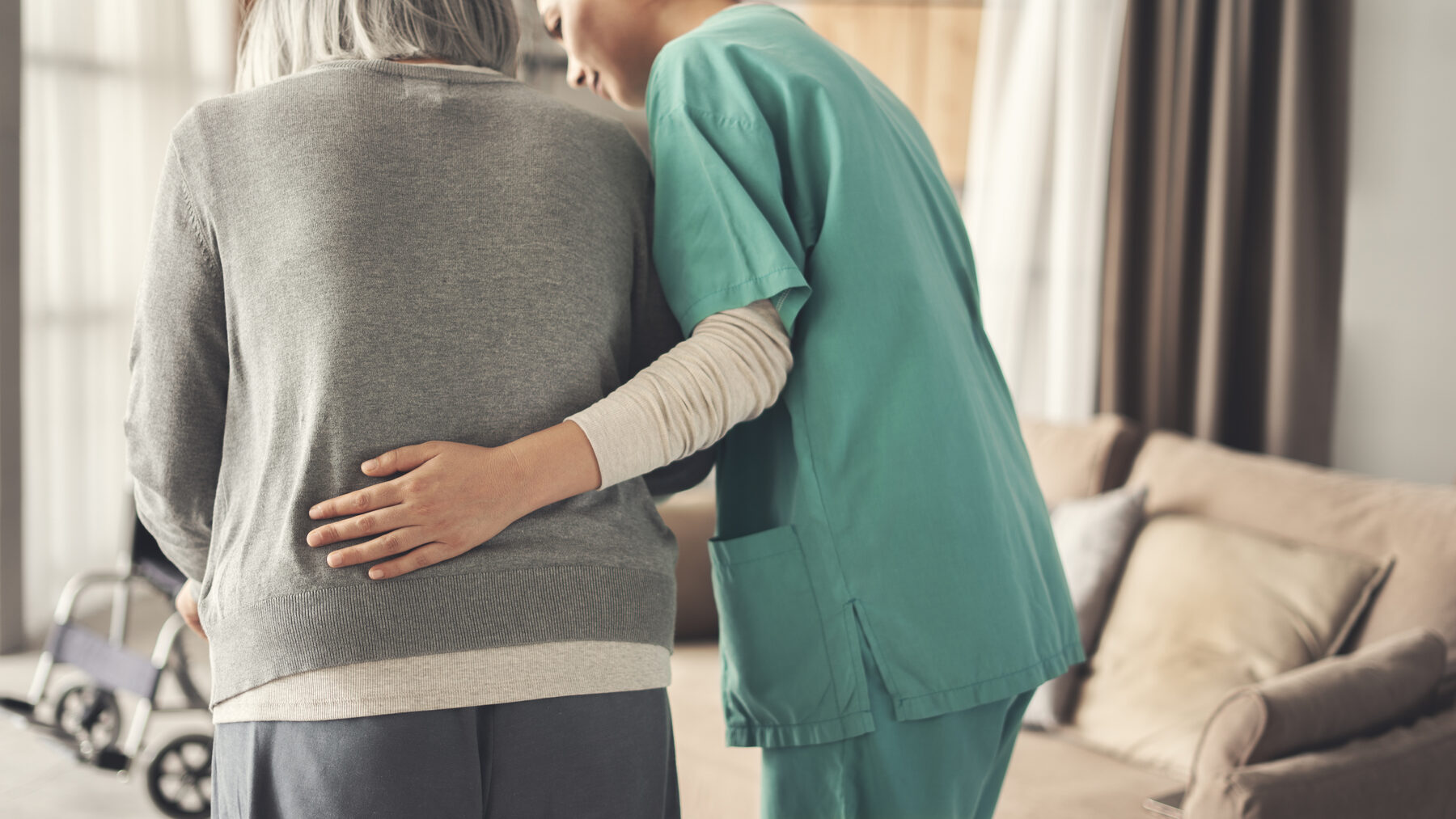
Concretely, the candidate must be able to move from bed to chair, chair to toilet, wheelchair to bed with the concrete help of a single caregiver — without requiring two-person assist or routine full-lift transfer. Occasional patient-lift use is fine; what falls outside our capacity is routine dependency on two caregivers.
For profiles with cognitive impairment or wandering risk, the secured floor provides the appropriate environment. For mental-health profiles, daily support and supervised medication are integral to the offering.
The autonomy threshold applies at admission. Once a resident, our Category 4 certification and care units let us continue providing the required clinical support if autonomy declines over time — without necessarily triggering a transfer to the public network. The person can age in place.
How it works
Four steps.
First contact
The social worker or intervenant writes to direction@residenceunique.ca.
Admission document
The director sends the admission form. It documents the candidate's health status, care needs, and autonomy level.
Autonomy criterion check
The candidate must be able to perform transfers (pivots) with one-person assist. This is the clinical floor below which we cannot guarantee adequate care.
Visit and move-in
The family and candidate visit the residence and choose the unit (regular, care unit, or secured floor depending on the profile).
Profiles welcomed
Beyond age alone.
- Autonomous and semi-autonomous seniors
- Adults with mental health needs
- Mild cognitive loss, Alzheimer's
- Parkinson's disease
- Mild intellectual disability
- Physical disability compatible with the autonomy criterion
- Convalescence and short-term stay
- Couples — cohabitation possible
Start a referral in a few minutes.
Fill out this form to send the information to direction. You may also attach an existing evaluation document.
Reach direction directly.
If you prefer email or a phone call, here are direction's contact details.
direction@residenceunique.ca 819-821-2100